
Lord Nguyen Phuc Nguyen: The Visionary Ruler Behind Princess Anio and Hoi An's Golden Age
- Thạch Thanh Thảo
- Jun 20
- 6 min read

Introduction
Lord Nguyen Phuc Nguyen is remembered as one of the most influential rulers in Vietnamese history. Known as Lord Sai, he transformed Hoi An into one of Asia’s most important international trading ports during the seventeenth century and established the conditions that enabled cultural and commercial exchanges between Vietnam and Japan to flourish.
Today, many people know him as the foster father of Princess Anio, also known as Princess Ngoc Hoa, whose marriage to the Japanese merchant Araki Sotaro became a lasting symbol of friendship between the two nations. Yet the story of Lord Nguyen Phuc Nguyen extends far beyond that famous connection. His vision for international trade, diplomacy, and cultural openness helped shape the golden age of Hoi An and laid the foundations for more than four centuries of Vietnam–Japan relations.
Table of Contents
Who Was Lord Nguyen Phuc Nguyen?
Lord Nguyen Phuc Nguyen was born in 1563 as the sixth son of Nguyen Hoang, the founder of the Nguyen Lords' government in Dang Trong, the southern region of Vietnam.
At a young age, he demonstrated remarkable leadership and military ability. Historical records describe him as intelligent, disciplined, and capable of commanding both military and administrative affairs. These qualities earned the trust of his father and prepared him to assume leadership during a critical period in Vietnamese history.
When Nguyen Hoang passed away in 1613, Nguyen Phuc Nguyen inherited the position of ruler of Dang Trong. At that time, Vietnam was politically divided between the Trinh Lords in the north and the Nguyen Lords in the south. Instead of focusing solely on military conflict, he pursued a broader vision that combined defense, economic development, maritime trade, and diplomatic engagement.
This strategy would transform Dang Trong into one of Southeast Asia’s most prosperous regions.

The Rise of Lord Sai
Nguyen Phuc Nguyen became widely known as Lord Sai, a title reflecting both his political authority and personal reputation.
His administration introduced reforms that strengthened government institutions, expanded commerce, and improved relations with foreign traders. While many rulers in Asia remained cautious about international contact, Lord Sai recognized the opportunities presented by maritime trade.
He understood that prosperity depended not only on military strength but also on economic connections with neighboring countries. This insight would become one of the defining characteristics of his reign.
Under his leadership, ports were expanded, trade regulations were improved, and foreign merchants were welcomed to conduct business in Dang Trong.
Building Hoi An into an International Trading Port
One of Lord Nguyen Phuc Nguyen’s greatest achievements was the development of Hoi An as an international trading port.
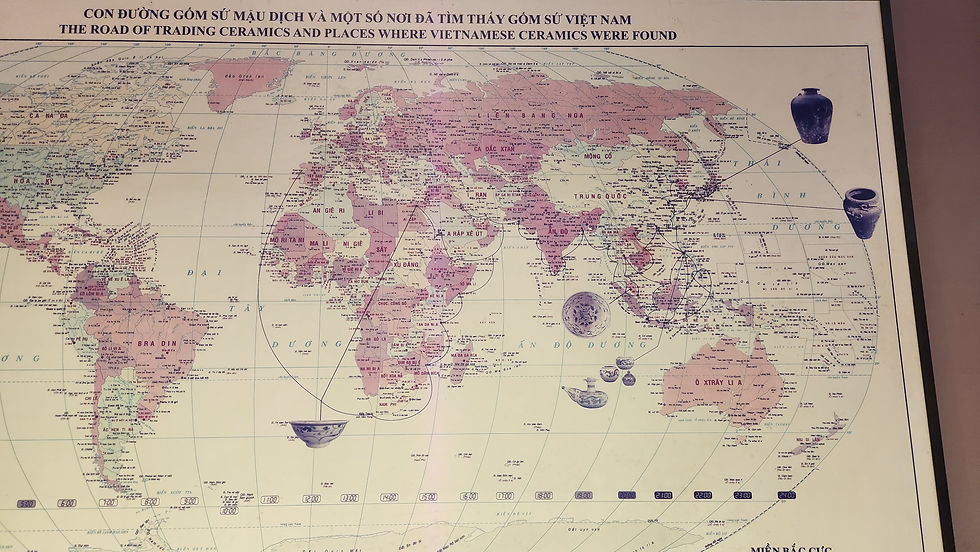
Located on the central coast of Vietnam, Hoi An occupied a strategic position along maritime routes linking East Asia, Southeast Asia, and Europe. Recognizing its potential, Lord Sai encouraged merchants from around the world to establish trading activities there.
By the early seventeenth century, Hoi An had become a bustling commercial center attracting traders from:
Japan
China
Portugal
The Netherlands
Spain
Southeast Asian kingdoms
The city became known for exporting silk, ceramics, sugar, spices, eaglewood, and other valuable products.
Unlike many contemporary ports, Hoi An welcomed multicultural communities. Japanese and Chinese merchants established their own neighborhoods, built places of worship, and contributed to the city's economic growth.
This environment of openness and cooperation made Hoi An one of Asia’s leading maritime cities.
The Red Seal Ship Trade and Japan
A major factor in Hoi An’s success was its connection to Japan through the Red Seal Ship trade network.
During the early Edo period, the Tokugawa Shogunate issued official licenses known as Red Seal permits that authorized Japanese merchants to engage in overseas commerce. Many of these voyages traveled to Hoi An.
Japanese merchants arrived seeking high-quality Vietnamese silk and other goods that were in great demand in Japan.
Lord Nguyen Phuc Nguyen actively supported these commercial exchanges. He maintained diplomatic communication with Japanese authorities and ensured that Japanese traders could operate safely within his territory.
As a result, Hoi An became one of the most important Japanese trading destinations in Southeast Asia.
The prosperity generated by these connections benefited both nations and fostered a relationship that extended beyond commerce.
Lord Nguyen Phuc Nguyen as the Foster Father of Princess Anio
Among the many historical figures associated with Lord Sai, none is more famous today than Princess Anio.
Known in Vietnam as Princess Ngoc Hoa, she is widely believed to have been the foster daughter of Lord Nguyen Phuc Nguyen.
Growing up within the Nguyen court, she witnessed firsthand the flourishing international environment that characterized Hoi An during the seventeenth century.
Her life would eventually become intertwined with the growing relationship between Vietnam and Japan.
Today, Princess Anio is celebrated as a symbol of cultural exchange, friendship, and mutual understanding between the two countries.
However, her story would not have been possible without the political and economic environment created by Lord Nguyen Phuc Nguyen.
The Marriage of Princess Ngoc Hoa and Araki Sotaro
In 1619, Princess Ngoc Hoa married Araki Sotaro, a prominent Japanese merchant who frequently traveled between Nagasaki and Hoi An.
The marriage represented far more than a personal relationship.
It reflected the close ties that had developed between Japanese merchants and the Nguyen administration. Through this union, commercial and cultural exchanges between the two societies became even stronger.
After the marriage, Princess Ngoc Hoa accompanied her husband to Nagasaki.
There, she became known as Anio-san.
Over the centuries, her story has remained alive in Japanese cultural memory. During the Nagasaki Kunchi Festival, traditions associated with the arrival of Anio-san continue to be celebrated, preserving the historical connection between Nagasaki and Hoi An.
The enduring popularity of her story demonstrates the success of the diplomatic and cultural bridges established during Lord Sai’s reign.
The Beginning of Vietnam–Japan Relations
Modern Vietnam–Japan relations are often viewed through the lens of contemporary diplomacy and economic cooperation.
However, their roots can be traced back more than four hundred years to the period of Lord Nguyen Phuc Nguyen.
His policies encouraged international exchange and welcomed foreign communities into Dang Trong.
Rather than viewing outsiders as threats, he saw them as potential partners.
This approach allowed commercial networks, cultural exchanges, and diplomatic relationships to flourish.
The story of Princess Anio and Araki Sotaro became one of the earliest and most memorable examples of these connections.
Today, numerous cultural events, academic studies, and friendship programs continue to commemorate this shared history.

The Legacy of Lord Nguyen Phuc Nguyen
Lord Nguyen Phuc Nguyen passed away in 1635, but his influence remains visible today.
His legacy can be seen in:
Hoi An World Heritage City
The multicultural character of Hoi An reflects the openness and international outlook that he encouraged.
Vietnam–Japan Friendship
The historical relationship between the two countries continues to draw inspiration from the exchanges that occurred during his reign.
Princess Anio's Story
The enduring memory of Princess Anio in both Vietnam and Japan highlights the long-term impact of his diplomatic vision.
Maritime Trade History
Historians recognize Lord Sai as one of the architects of Vietnam's early international trading networks.
More than four centuries later, his achievements continue to shape how people understand Hoi An’s golden age and Vietnam’s role in regional commerce.
Conclusion
Lord Nguyen Phuc Nguyen was much more than the foster father of Princess Anio.
He was a visionary ruler who transformed Hoi An into one of Asia’s leading trading ports, strengthened international commerce, and fostered meaningful connections between Vietnam and Japan.
Through his leadership, Dang Trong entered a period of prosperity and global engagement that would leave a lasting mark on history.
The story of Princess Anio, the flourishing trade between Hoi An and Nagasaki, and the enduring friendship between Vietnam and Japan all trace their origins to the remarkable vision of Lord Sai.
More than four hundred years later, his legacy remains an essential part of the shared heritage connecting Hoi An, Nagasaki, Vietnam, and Japan.
Explore More About Anio-san
Related Articles:
Princess Anio (Ngoc Hoa): A Bridge Between Vietnam and Japan
Araki Sotaro and the Story of Hoi An
Red Seal Ships and Maritime Trade in the Seventeenth Century
Nagasaki Kunchi Festival and the Legacy of Anio-san
Hoi An Trading Port During Its Golden Age
Learn more about the historical figures and events that shaped the extraordinary connection between Hoi An and Japan at Hoianio.com.


Comments