
Why Did Japanese Merchants Come to Hội An? The Story Behind Vietnam's Golden Age of Trade
- Thạch Thanh Thảo
- Jul 12
- 8 min read

Today, Hội An is famous for its lantern-lit streets, yellow houses, and the iconic Japanese Covered Bridge. Every year, millions of visitors explore the ancient town, often hearing stories about the Japanese merchants who once lived there.
But one question is rarely asked:
Why did Japanese merchants travel more than 3,000 kilometers across the sea to trade in Hội An?
During the early seventeenth century, the journey from Nagasaki to central Vietnam was neither easy nor safe. Merchant ships crossed dangerous waters, seasonal monsoon winds, pirates, and political uncertainty.
Yet hundreds of Japanese traders continued making the voyage. Their arrival transformed Hội An into one of Asia's busiest international ports and laid the foundation for one of the most remarkable cultural connections in Vietnamese history—the marriage between Princess Anio and Japanese merchant Araki Sotaro.
The answer lies not in a single event but in the intersection of politics, geography, economics, and diplomacy. Together, these factors created an extraordinary period when Hội An became Japan's most important trading partner in Southeast Asia.
Table of Contents
1. Why Couldn't Japanese Merchants Trade Directly with China?
To understand why Japanese merchants sailed to Hội An, we must first look north toward China.
During the late Ming Dynasty, relations between China and Japan were complicated by political tensions and maritime security concerns. Chinese authorities imposed strict regulations on overseas trade through a policy commonly known as the Haijin, or "sea ban." Although the policy changed over time, direct commercial exchanges between Chinese and Japanese merchants remained heavily restricted.
Another factor was the rise of the Wokou, maritime raiders who operated throughout the East China Sea during the sixteenth century. While not all pirates were Japanese, their activities made maritime trade increasingly sensitive and contributed to tighter controls by the Ming government.
Despite these restrictions, Japan's economy continued to grow. The country needed Chinese silk, ceramics, medicines, books, and luxury goods, while China valued Japanese silver, which had become one of East Asia's most important trading currencies.
Since direct trade was difficult, Japanese merchants began looking for alternative ports where Chinese goods could be purchased legally.
Southeast Asia became the answer.
Ports throughout present-day Vietnam, Thailand, Cambodia, and the Philippines emerged as international trading hubs where merchants from many countries exchanged goods.
Among them, one port stood out above the rest.
2. Why Was Hội An the Perfect Trading Port?
While many Southeast Asian ports welcomed foreign merchants, Hội An offered a unique combination of geographical, political, and economic advantages that few other ports could match.
Located at the mouth of the Thu Bồn River in central Vietnam, Hội An connected the South China Sea with an extensive inland river network. Ships arriving from Japan, China, Siam, or the Malay Archipelago could easily unload their cargo before transporting goods further inland.
More importantly, Hội An sat at the crossroads of major maritime trade routes.
Merchants sailing between Japan and Southeast Asia often timed their voyages according to the annual monsoon winds. The northeast monsoon carried ships southward during the winter months, while the southwest monsoon brought them back toward Japan several months later. This natural sailing schedule made Hội An an ideal seasonal destination for Japanese traders.
Unlike many ports that specialized in only one type of product, Hội An functioned as an international marketplace.
Chinese merchants brought silk, porcelain, tea, and medicines. Vietnamese producers supplied silk, cinnamon, sugar, agarwood, and forest products. European traders introduced firearms, textiles, and silver. As a result, Japanese merchants could purchase products from multiple regions without having to visit each country separately. French historians have described Hội An during the seventeenth century as one of Asia's great cosmopolitan ports, where dozens of languages could be heard along the waterfront and merchants from Japan, China, Portugal, the Netherlands, and many parts of Southeast Asia conducted business side by side.
For Japanese traders, Hội An was not simply another destination. It was one of the most efficient trading centers in the region.

3. What Did Japanese Merchants Buy in Hội An?
Trade between Japan and Hội An was never one-sided. Each voyage reflected the economic needs of both countries. For Japanese merchants, one of the most valuable products available in Hội An was raw silk.
During the Edo period, silk was highly prized in Japan for clothing worn by samurai families, wealthy merchants, and the imperial court. Domestic silk production could not fully satisfy demand, making imported silk an essential commodity. Chinese silk was also available through Hội An's extensive commercial networks, allowing Japanese merchants to obtain luxury textiles without trading directly with China.
Another highly sought-after product was agarwood (known in Vietnam as trầm hương).
Harvested from forests in central Vietnam, agarwood was prized throughout East Asia for incense, religious ceremonies, medicine, and luxury perfumes. Its rarity made it one of the most valuable exports from Đàng Trong.
Japanese merchants also purchased:
Cinnamon
Pepper
Sugar
Deer hides
Ceramics
Medicinal herbs
Tropical woods
In return, Japanese ships brought products that were equally valuable in Vietnam.
Among the most important was silver.
During the late sixteenth and early seventeenth centuries, Japan was one of the world's leading producers of silver. The precious metal became the preferred currency for international trade across East Asia.
Japanese merchants also exported:
Copper
Iron
Metal tools
Fine swords
Household goods
Coins
Rather than exchanging only local products, Hội An became part of a much larger regional trading network.
A merchant might arrive carrying Japanese silver, purchase Chinese silk in Hội An, exchange part of it for Vietnamese agarwood, and then continue trading elsewhere in Southeast Asia before returning home.
This interconnected system made Hội An far more than a Vietnamese port—it became a gateway linking multiple economies across Asia.

4. Why Did the Nguyễn Lords Welcome Japanese Merchants?
The success of Hội An was not accidental. It was encouraged by the rulers of Đàng Trong.
During the early seventeenth century, Lord Nguyễn Phúc Nguyên recognized that international trade could strengthen his domain economically and politically.
At the time, Vietnam was divided between the Nguyễn Lords in the south and the Trịnh Lords in the north. Maintaining a strong military required enormous financial resources.
Foreign trade offered a reliable source of income through customs duties, commercial taxes, and diplomatic relationships with overseas merchants.
Unlike some neighboring states that imposed heavier restrictions, the Nguyễn Lords actively encouraged foreign commerce. Japanese merchants were granted permission to establish warehouses, residences, and trading communities in Hội An.
Historical correspondence preserved between the Tokugawa Shogunate and the Nguyễn Lords suggests that both governments viewed commercial exchange as beneficial. Trust gradually developed between the two sides. This atmosphere allowed personal relationships to flourish alongside commercial partnerships.
One of the most famous examples was Araki Sotaro, a wealthy merchant from Nagasaki who became closely connected with the Nguyễn court. According to both Vietnamese and Japanese historical traditions, Araki Sotaro later married the woman remembered today as Princess Anio, creating one of the earliest recorded family ties between Vietnam and Japan. Their marriage symbolized something much greater than a personal relationship.
It represented the close diplomatic and commercial friendship that had developed through decades of peaceful trade.
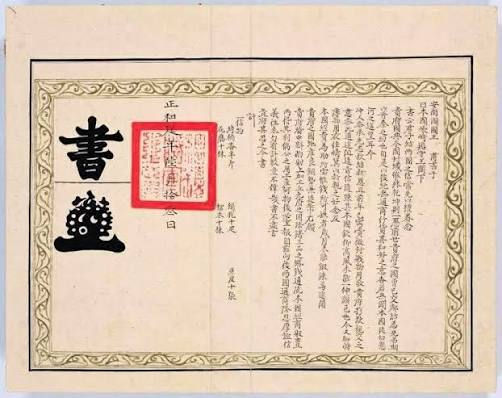
5. How Did the Red Seal Ship System Transform Hội An?
The flourishing relationship between Japan and Hội An would not have been possible without the Red Seal Ship system, known in Japanese as Shuinsen (朱印船).
Beginning in the late sixteenth century, the Tokugawa Shogunate introduced a licensing system for overseas trade. Japanese merchants who wished to conduct international business were required to obtain an official document called a Shuinjō, or "Red Seal Permit," bearing the shogun's vermilion seal.
These permits authorized ships to sail abroad legally and ensured that overseas commerce remained under government supervision.
Between the late 1500s and the 1630s, hundreds of Red Seal Ships crossed the seas connecting Japan with Southeast Asia. Among their many destinations, Hội An became one of the most important ports.
Historical records indicate that dozens of licensed Japanese ships visited Hội An, making it one of the busiest destinations in the entire Red Seal trade network.
The growing number of Japanese merchants eventually led to the establishment of a Japanese Quarter, or Nihonmachi, within Hội An.
Unlike temporary trading camps, the Japanese Quarter became a vibrant community where merchants built houses, warehouses, temples, and businesses. Some chose to settle permanently, marrying local women and raising families whose lives blended Vietnamese and Japanese traditions.
One of these merchants was Araki Sotaro, whose marriage to Princess Anio later became the most enduring symbol of the relationship between the two countries.
Today, although the original Japanese Quarter has largely disappeared, its legacy can still be seen in Hội An's cultural heritage.
The most famous reminder is the Japanese Covered Bridge (Chùa Cầu), which has become one of Vietnam's best-known historical landmarks and a lasting symbol of centuries of friendship between Japan and Vietnam.

6. Why Did Japanese Merchants Stop Coming to Hội An?
Like many remarkable periods in history, the golden age of Japan–Hội An trade eventually came to an end. In the 1630s, the Tokugawa Shogunate introduced the Sakoku, or "closed country," policy.
Concerned about foreign political influence, Christianity, and domestic stability, the Japanese government gradually prohibited most overseas travel. Japanese citizens were no longer permitted to sail abroad freely, and those already living overseas were generally forbidden from returning to Japan.
As a result, the Red Seal Ship trade came to an end. Without the regular arrival of Japanese merchant vessels, the Japanese Quarter in Hội An slowly declined. Some merchants returned to Japan before the restrictions became fully effective. Others remained in Hội An permanently, marrying into local families and becoming part of Vietnamese society.
Meanwhile, Chinese merchants gradually replaced the Japanese community as the dominant foreign commercial group in Hội An. The city's international character continued, but its relationship with Japan entered a quieter chapter. Although commercial exchanges diminished, the friendships built during those decades did not disappear.
The story of Princess Anio and Araki Sotaro continued to be remembered in both Vietnam and Japan, preserved through historical documents, family traditions, and cultural festivals that survived long after the ships themselves had stopped sailing.
Conclusion
Japanese merchants did not travel to Hội An by coincidence.
They came because geography, politics, economics, and diplomacy created an extraordinary opportunity unlike anywhere else in Southeast Asia. China's restrictions on direct trade encouraged Japanese merchants to seek alternative markets.
The strategic location of Hội An, combined with the open trade policies of the Nguyễn Lords, transformed the city into one of Asia's most important international ports. Through the Red Seal Ship system, Japanese merchants established thriving communities, exchanged valuable goods, and built lasting relationships with the people of Đàng Trong. These commercial connections eventually gave rise to stories that still resonate today - including the remarkable marriage of Princess Anio and Araki Sotaro, a relationship that has become a symbol of more than four centuries of friendship between Vietnam and Japan.
Today, visitors walking through Hội An can still discover traces of this shared history. The Japanese Covered Bridge, historical documents, archaeological discoveries, and cultural exchanges all remind us that trade is about far more than goods.
And sometimes, love stories that continue to inspire generations on both sides of the sea.
References
This article was written based primarily on the following research and historical resources:
CAPASIA – "The Chinese in Nagasaki and Japanese Systems of Trade Control"
https://www.capasia.eu/the-chinese-in-nagasaki-and-japanese-systems-of-trade-control/
Association des Amis du Musée Cernuschi – "Japan and Đại Việt in the 17th Century: Privileged Trading Partners"
The article also incorporates generally accepted historical knowledge regarding the Red Seal Ship system, the international trading port of Hội An, and early Vietnam–Japan relations.
Acknowledgements
We would like to express our sincere appreciation to the authors and organizations behind the two research articles referenced above. Their careful work in documenting the commercial and cultural exchanges between Japan and Đại Việt has provided valuable insights into one of the most fascinating chapters of Asian maritime history.
Their research continues to inspire a deeper understanding of the historical connections between Hội An and Nagasaki, helping preserve a shared heritage that links Vietnam and Japan across more than four centuries.
Comments